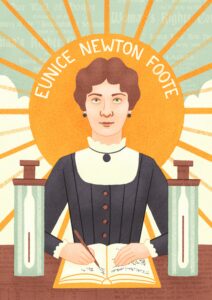
Eunice Foote (1819-1888)
Eunice Foote was an amateur scientist who was the first to notice the ability of carbon dioxide and water vapor to absorb heat. She made the connection between the variability of these atmospheric gases and climate change. Foote discovered this relationship in 1856, three years before John Tyndall, who is seen as one of the founders of climate science. Foote paved the way for contemporary and future scientists to understand the greenhouse effect, climate change, weather, and meteorology.
Katsuko Saruhashi (1920-2007)
Katsuko Saruhashi earned a bachelor of science in chemistry in 1943. After this she joined the Geochemistry Lab at the Meteorological Research Institute (now called the Japan Meteorological Agency), where she developed the first method for measuring carbon dioxide in seawater. Her method, called the Saruhashi Table, uses temperature, pH, and salinity to determine carbon dioxide levels in water. This method became the global standard. Saruhashi became the first woman to earn a PhD in chemistry at the University of Tokyo in 1957. She was also the first woman to be elected to the Science Council of Japan and broke many other barriers during her career.
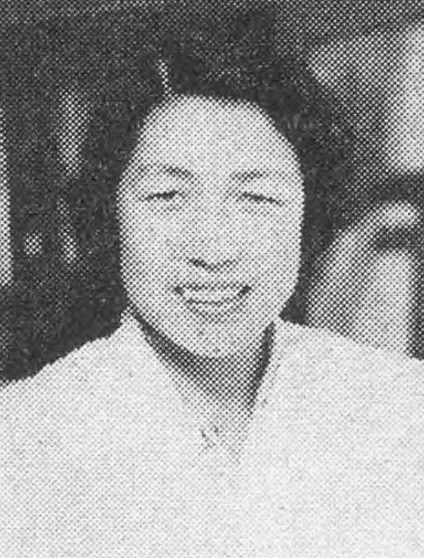
Eugenia Kalnay (1942-2024)
Eugenia Kalnay earned a master’s degree in meteorology at the University of Buenos Aires in Argentina in 1965. Over the course of her career, she broke several barriers, becoming the first woman to earn a PhD in meteorology at MIT in 1971, the first woman faculty member in the Department of Meteorology at MIT in 1973, and the first woman director of the NOAA Environmental Modeling Center in 1987. Kalnay became the department chair of the University of Maryland Department of Atmospheric and Oceanic Sciences at the University of Maryland from 1999 until her retirement in 2023. In 2001, she was named a Distinguished University Professor, UMD’s highest distinction for faculty. After her retirement, she retained an Emeritus status with UMD’s Earth System Science Interdisciplinary Center and kept working on science.
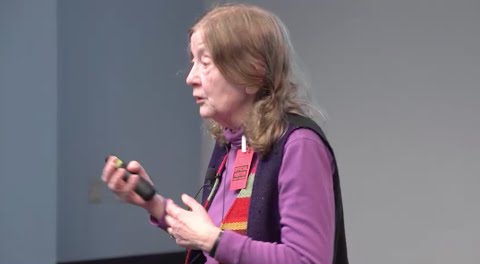
Lisa Goddard (1966-2022)
Lisa Goddard earned a bachelor of science in physics at University of California, Berkeley. She earned a PhD at Princeton University, where she researched how the El Nino Southern Oscillation (ENSO) impacts the global climate. She worked at the International Research Institute for Climate and Society, the world’s first international institute filling the gap between daily weather predictions and long-term climate change research. Goddard served as director of the institute from 2012-2020.
Judith Vergun
Judith Vergun earned a PhD in Agricultural Sciences at Oregon State University in 1993, after a career as a model and actress. Vergun’s work combines her traditional ecological knowledge and ecological research to address sustainable agricultural management practices. In 2004, she was honored with a Presidential Award for Excellence in Science, Mathematics, and Engineering Mentoring. She is currently Director for Conference and Presentation Programs in the Association for Integrity and Responsible Leadership in Economics and Related Professions in Washington, DC.
Zakiya Leggett
Zakiya Leggett is a forest soil ecologist who also studies participatory science and diversity and inclusion in natural resources. She is an associate professor at North Carolina State University and co-director for the Citizen Science/Participatory Science Campus at NC State. She is also the director for the Doris Duke Conservation Scholars Program, Scholars for Conservation Leadership Program, and other programs, all of which have the goal of increasing exposure to and retention in conservation biology, forest ecology, and natural resources with focus on first generation students and students of color.