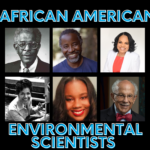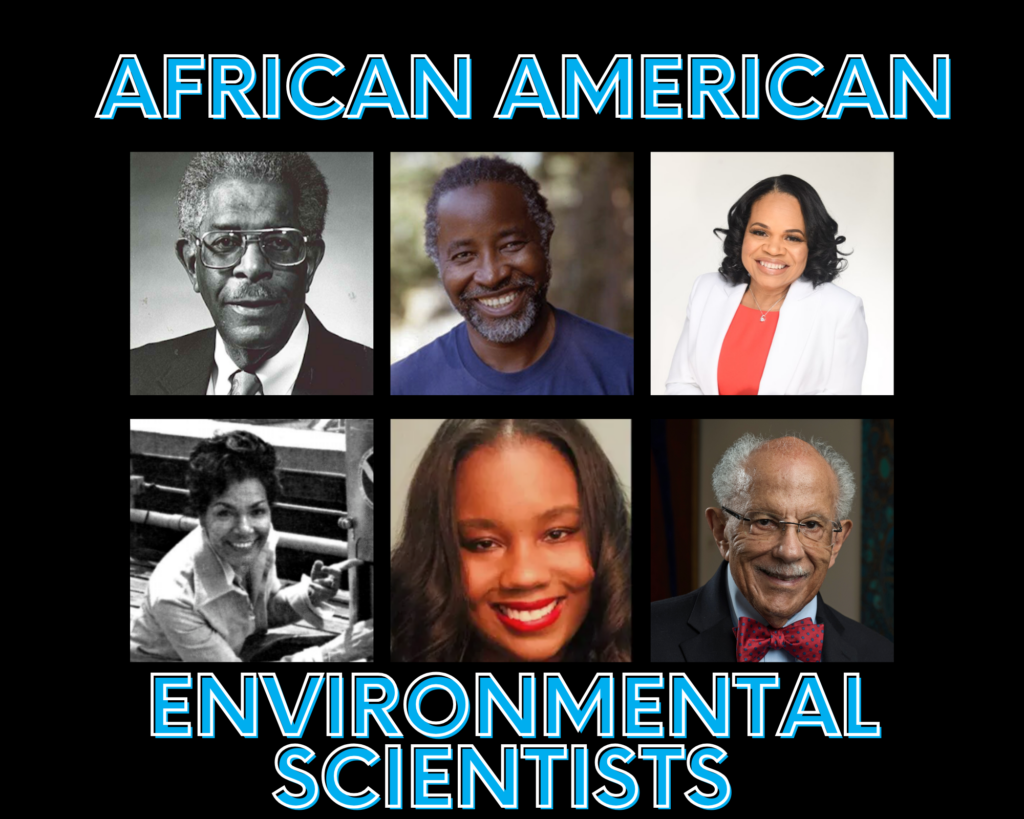
Many of us know about the groundbreaking accomplishments of George Washington Carver, a Black botanist who was born into slavery but died a free man. Carver promoted plant rotation for soil health, and was an expert in the uses of plants like peanuts, soybeans, and sweet potatoes. Many have also learned about Benjamin Banneker, who was a tobacco farmer and self-taught astronomer and mathematician from what is now Ellicott City, Maryland. He wrote and published a series of almanacs between 1792 and 1797. But many other Black people contributed to the natural sciences before and after them. This piece profiles just a few African American scientists who left their mark in the fields of meteorology, oceanography, and environmental sciences.
Charles E. Anderson (1919-1994)
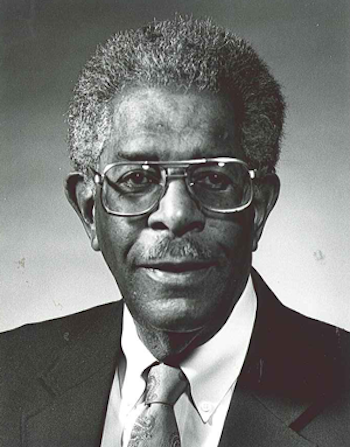
Charles E. Anderson was the first African American to earn a doctorate in meteorology, which he earned at MIT in 1960. Before this, Anderson was a weather officer for the US Army Air Forces from 1943-1948, serving with the Tuskegee Airmen from 1943-1944 during World War II.
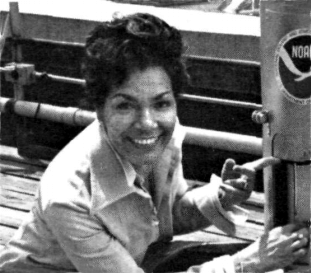
June Bacon-Bercey (1928-2019)
June Bacon-Bercey was the first Black woman to receive a degree in meteorology at UCLA in 1954. She became the first female chief meteorologist ever at WGRZ in Buffalo, NY in 1972. In 1979, Bacon-Bercey transitioned to the National Oceanic and Atmospheric Administration (NOAA) to serve as its chief of weather and television services. In 1980, she funded Jackson State University’s meteorology lab, the first of its kind at a historically Black university in the United States. AMS renamed its Award for Broadcast Meteorology to the June Bacon-Bercey Award in 2021.
John Francis (1946-)
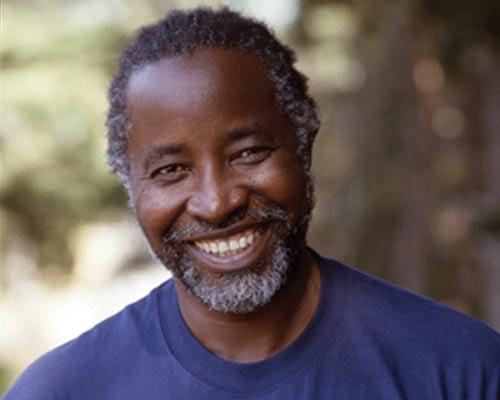
John Francis was inspired to forgo motorized vehicles in 1971 after a destructive crash between two oil tankers that dumped around 500,000 gallons of oil into the San Francisco Bay. On his 27th birthday in 1973, he took a 17-year vow of silence, which he ended in 1990. In 1982, he founded Planetwalk, which “[promotes] environmental education and responsibility and a vision of world peace and cooperation.” Francis earned a doctorate in Land Resources in 1991 at the University of Wisconsin-Madison. Watch his 2008 TED Talk, “Walk the Earth…my 17-year vow of silence” to learn about why he stopped talking and what he learned during that time.
Courtney Grimes
Courtney Grimes is an atmospheric scientist with the Environmental Defense Fund (EDF). She helps to advocate for communities disproportionately impacted by air pollution from highways, rail yards, and airports. Before her time with the EDF, Grimes earned a PhD in chemistry with research focusing on atmospheric chemistry from the University of Maryland in 2021.

Ashanti Johnson

Ashanti Johnson was the first Black student to graduate with a Ph.D. in Oceanography from Texas A&M University. She uses biogeochemical indicators to interpret events that have impacted marine, estuarine, and freshwater environments in the Arctic and southeastern United States. Johnson received the US Presidential Award for Excellence in Science Mathematics and Engineering Mentoring from President Obama and the American Geophysical Union Excellence in Geophysical Education and Ambassador Awards.
(image attribution: Vgarr, CC BY-SA 4.0 <https://creativecommons.org/licenses/by-sa/4.0>, via Wikimedia Commons)
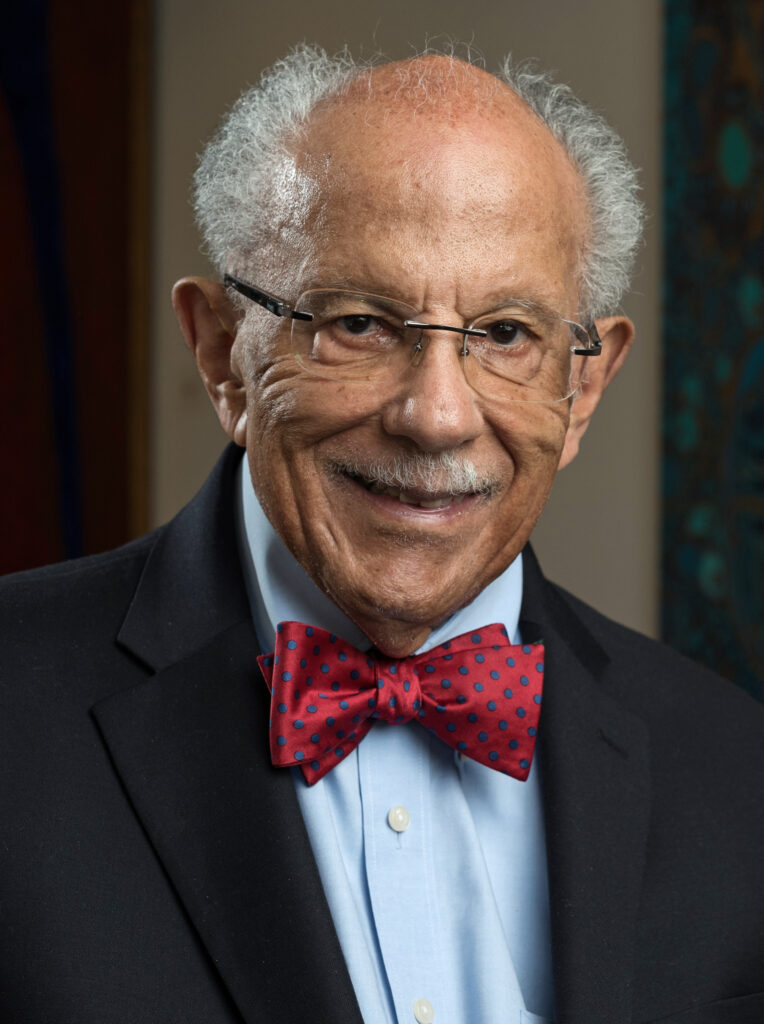
Warren M. Washington (1936-2024)
Warren M. Washington was the second African American to earn a doctorate in atmospheric science. He helped develop one of the first computer models that forecast climate change scenarios. Washington emerged as a prominent voice in efforts to curb human-caused emissions and adjust government policymaking to address climate change. He published his autobiography, “Odyssey in Climate Modeling, Global Warming, and Advising Five Presidents” in 2007. He also earned the Nobel Peace Prize with Al Gore in 2007 as part of the United Nations’ Intergovernmental Panel on Climate Change.
(image attribution: Oregon State University, CC BY-SA 2.0 <https://creativecommons.org/licenses/by-sa/2.0>, via Wikimedia Commons)